Wednesday, December 7, 2022
About Guns, Again

Saturday, November 19, 2022
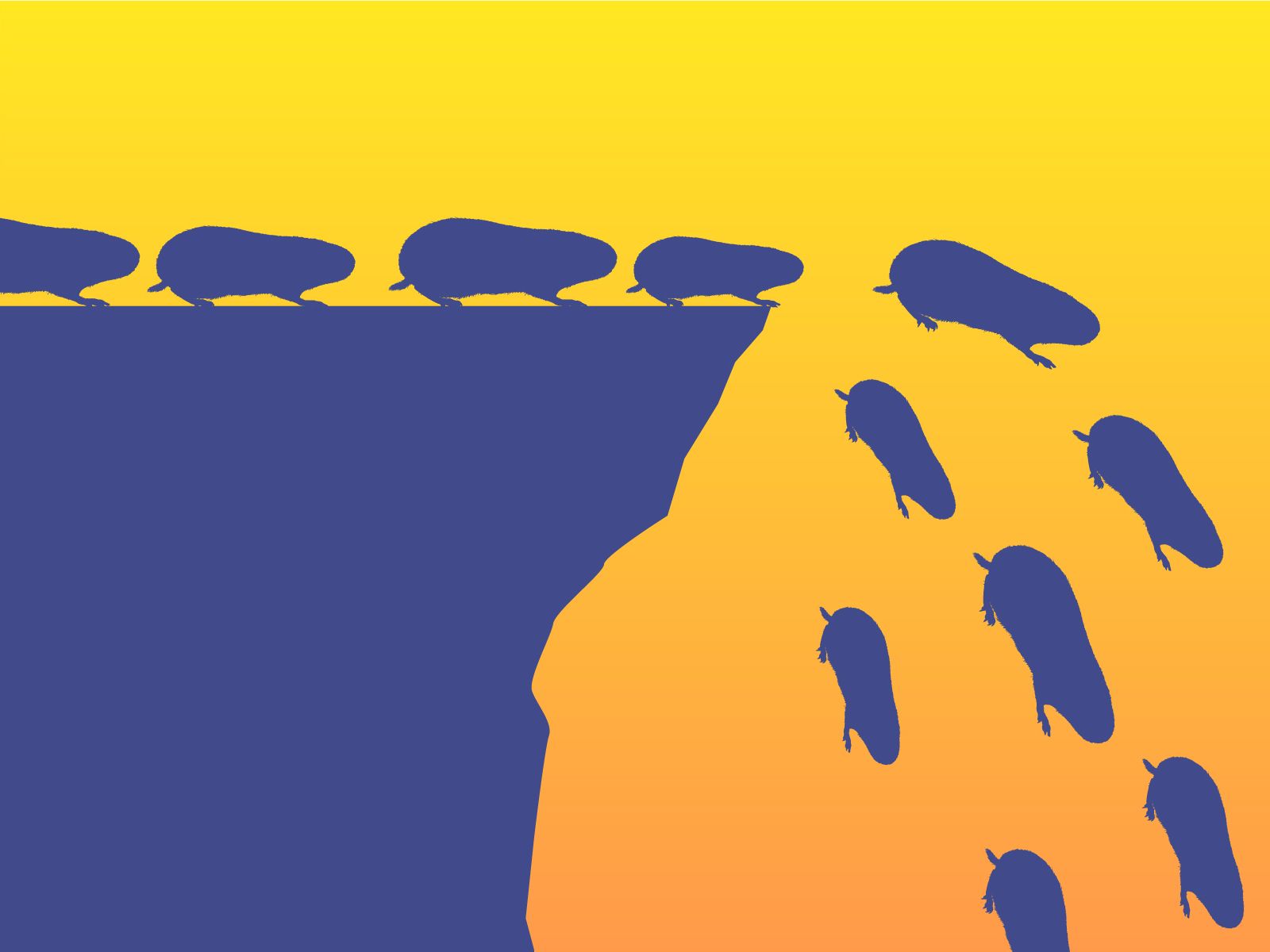
The Power of Stupidity
By
Madeleine KandoYou cannot call someone stupid these days, or you could be arrested for political incorrectness. There are other alternatives, like calling someone an airhead, a bird brain, or a dumbass, but that might land you on the floor with a bloody nose.
Thanks to the incredible richness of the American language, however, there are safer ways to describe a stupid person (preferably without them being present): ‘He’s one fry short of a happy meal. ‘The light is on, but nobody’s home. ‘As bright as Alaska in December. ‘Goes surfing in Nebraska. ‘His belt doesn't go through all the loops. ‘His cheese has slipped off his cracker.’
Humor goes a long way, but it doesn’t change the fact that of all our human qualities, stupidity is the most abundant.
What is stupidity? Wikipedia’s definition is: ‘Stupidity is a lack of intelligence, understanding, reason, or wit. It may be innate, assumed or reactive’. Does that really explain why the world is full of stupid people and why non-stupid people do so many stupid things?
I was lucky enough (not smart enough) to come across an essay called: "The Basic Laws of Human Stupidity", written by Carlo Maria Cipolla, an Italian economic historian. This is what he has to say about stupidity:
THE FIRST BASIC LAW: Everyone always and inevitably underestimates the number of stupid individuals in circulation.
THE SECOND BASIC LAW: The probability that a certain person will be stupid is independent of any other characteristic of that person.*
THE THIRD BASIC LAW (The Golden Rule): A stupid person is a person who causes losses to others while deriving no gain to self and even possibly incurring losses.
Human beings fall into four basic categories: the Helpless, the Intelligent, the Bandit and the Stupid (See figure 1). If you suffer a loss while producing a gain to someone else, you are in field H: You act helplessly. If you make a gain while also creating a gain to others, you in area I: You act intelligently. If you gain something, but cause someone else a loss, you are in area B: you act as a bandit. If you do something that harms others and yourself, you fit in area S. You act stupidly.
Rational people have difficulty understanding irrational behavior. We can deal with a devious person’s motivation, or avoid being played for a patsy, but because you have to be smart enough to recognize how stupid you are, a stupid person will never realize that they are stupid. They will overestimate their own competence, knowledge etc.
Saturday, November 12, 2022
Nuclear War and other Bad Things. Probabilities and a Bit of Game Theory.

Tom Kando
I continue to fret about the war in Ukraine. I worry about Putin's nuclear saber rattling.
All the pundits keep reassuring us that this is mere bluff and that there is very little chance of this war escalating into nuclear Armageddon. Most of us don't have sleepless nights worrying about the possibility of nuclear war. Many of us did, during the Cuban missile crisis, but not now.
1. The probability of a bad event happening should be inverse to how terrible the event is likely to be. Put differently, the greater a risk is, the smaller the probability of failure, when taking that risk, should be.
For example, it is possible that I will catch a cold this winter. If a doctor told me that there is a probability of .33 (one out of three) of this happening, I will not worry very much. On the other hand, if someone told me that there is a .003 probability of nuclear war in the coming six months (one out of 300), I would worry quite a bit.
In other words, the greater a possible upcoming catastrophe is, the closer to zero its probable occurrence should be.
I have no idea whether there exists a negative correlation between how terrible an event is and how likely it is to happen.
One important aspect is the time frame: Is the bad thing likely to happen soon or in the distant future? The catastrophes which Hollywood likes so much - giant earthbound asteroids, devastating earthquakes, etc. - have the advantage of following geological and astronomical timetables. We don't worry about them, in the belief that they only occur once in a million years. What about global warming - the destruction of the planet? This may be the worst thing that can happen to us, and its likelihood is quite high. But it is happening gradually. We are the slowly boiling frog.Wednesday, November 9, 2022
Do Voting Systems Matter?
By
Madeleine Kando It’s election time and many of us are biting our nails, to see what will emerge after November 8. It’s like watching a football game: Two teams against each other. Or fighting with your sibling on which flavor ice cream your mom should buy, except the store only sells chocolate and vanilla.
But why is it like that? I come from a tiny country where there are no less than 17 political parties represented in the Legislature. Why is the US so stingy with its political parties?
To be fair, we really have four political parties rolled into two. We have the Sanders Democrats and the Biden Democrats on one side and the Trump Republicans and ‘Rino’s’ on the other side. Both parties have always been ‘big tents’, but now the ‘centrists’ are being so radicalized by their own extreme wings that they might not survive. Then all hope of compromise and working together goes out the window.
The two-party system is an outlier in the modern world. Wouldn’t it make sense to allow for these four parties rolled into two to legitimately exist on their own? This could only happen if we changed the way we vote.
In the US we have what is called a First Past the Post electoral system, or winner takes all. The candidate who receives the most votes wins. Sounds fair? Not really. If there are more than two candidates, that candidate could win with a minority of the votes. That is why we have red states and blue states. About a third of Massachusetts voters are Republicans, but since we have a ‘single member district’ voting system, all our Representatives are Democrats.
The First Past the Post electoral system does not allow for third parties to emerge. If you vote for a budding third party that has no chance of winning, you take away a vote from your preferred major party and the party you don’t like, wins. It’s called the spoiler effect. Ralph Nader caused Al Gore to lose the presidency in 2000.
What if you could have a system in which your vote did not ‘spoil’ the outcome? That system is now used in Alaska and Maine. It’s called Ranked Choice voting. You rank your candidates in order of preference. If you like a third party the best, that’s your first choice, but you can rank your preferred major party second. That way, even if your first choice doesn’t win, your vote goes to your second choice. The spoiler effect is gone. Read more...
Friday, October 21, 2022
Deja Vu All Over Again

I often think historically. From that perspective, I can see a couple of deja vu’s:
2. On Oct. 12, the United Nations voted to condemn Russia’s behavior in Ukraine. This, too, is reminiscent of the past:
In 1920, the planet took its first step ever toward world federalism, or world government. It created the League of Nations, with forty-two countries joining originally, growing to fifty-eight, headquartered in Geneva. To his everlasting credit, President Wilson used all his influence to promote the creation of this world body, in conjunction with the Treaty of Versailles and the conclusion of World War One. Sadly, due to customary senatorial malpractice, the US ended up not joining. The novel idea was that national borders, as drawn on maps, are sacrosanct. Nations enjoy sovereignty. No nation is to invade, occupy, attempt to possess territory belonging to another nation. Borders may be negotiable, but they are not to be altered through war.
Wednesday, September 28, 2022
What to do About Putin and Russia?

Tom Kando
Sunday, September 25, 2022
Are Hungarians from Mars?
![]() |
| Dr. Theodore von Karman |
There are moments in an immigrant’s life, when one wonders where one belongs. Where one’s identity lies. Are you the person that left or are you the person that arrived? An emigrant or an immigrant? You cannot be one without the other, obviously. It’s like asking an airplane not to depart before arriving at its destination.
Most immigrants are much too busy trying to survive to ask themselves these existential questions. It’s a luxury that only a retired self-absorbed immigrant like myself, can afford. Besides, you would think that being a veteran immigrant of almost 50 years, I would have solved that riddle a long time ago.
I left my native Hungary at a very early age, not having any say in the matter. Then I left France to move to Holland where I basically grew up. I performed some test flights in my early twenties to England and Spain, but my final destination was America, where I spent the rest of my life.
The question I ask myself: am I Hungarian? French? Dutch? American?
I don’t kid myself by thinking that I am unique as an immigrant. The whole world is either emigrating or immigrating. We are a curious species and contrary to the proverbial cat, it hasn’t killed us yet. It just makes us want to travel and discover even more.
But Hungarians are a special case. There are more Hungarians that live outside of Hungary than in the country itself. The first ‘diaspora’ was not because Hungarians left their country; their country left them. The post-World War I Treaty of Trianon reduced the fatherland to a fraction of what if was before. As a consequence, two million Hungarians found themselves living outside their own country.
Other ‘diasporas’ (including the persecution of Jews in the Second World War and the Hungarian Revolution of 1956) caused another 3 million Hungarians to leave their country, including little old me.
So what happened to all these millions of Hungarians? Did they become part of the ‘melting pot’? Just another patch in the crazy quilts that make up nations?
That assumption is not borne out by facts. Rather than politely blending into their new surroundings, like normal immigrants do, Hungarians always make their presence loudly known by being smarter or weirder, or more creative than others.
The Martians
This was especially the case with a group of prominent Hungarian physicists an mathematicians who emigrated to the United States in the early 20th century. They were Jewish and were fleeing the Nazi occupation. After some time ‘observing’ them, as scientist like to do, their colleagues at the Los Alamos Lab, started to suspect that these men with their superhuman intellect, who had arrived from an obscure country and spoke an incomprehensible foreign language, were not ordinary humans, but were really from Mars.*
Nobel Prize-winning physicist Enrico Fermi once casually asked fellow scientists the following question: “The universe is so vast that intelligent life must be out there in large numbers. Eventually they should spread out all over the Galaxy. These highly exceptional and talented people could hardly overlook such a beautiful place as our Earth. They should have arrived here by now, so where are they? " Read more...
Friday, September 16, 2022
In Memory of Ata Kando
Thursday, September 15, 2022
British Character

Tom Kando
Monday, September 12, 2022
What are Memories?
By Madeleine KandoThe word for ‘memory’ in old English is ‘murnan’, which means ‘to mourn or remember sorrowfully’. You recognize that meaning in the Dutch words ‘mijmeren’ or ‘peinzen’, which means ‘to ponder, muse or dream’.
To have memories always has a tinge of deep, regretfulness, whether we are talking about positive or negative memories. They are sorrowful because they represent moments that no longer exist. On the other hand, we wouldn’t be who we are without our memories. Memories define us. Like strands of spaghetti, memories make us reach into the past and into our future. It is only because we have memories that we can ‘imagine’ our future self.
As I write this, I have memories of the three weeks I just spent in Kauai. They are wonderful, but also sorrowful. I dream of still being there. The older these memories are, the more they approach the pining stage. Six months from now, when Boston is buried under five feet of snow and it is too cold to even take my dog out to pee, I will pine and sorrowfully muse about Kauai. I won’t pine for the centipede that one morning decided to share my shower cell and whose bite feels like you have just been shot. I won’t dream of the monster wave that knocked me down to the sandy bottom and almost crashed open my skull. Those details will be conveniently forgotten.
When I was on Kauai, there was no room for memories because the present was so overwhelming: Hiking in the jungle, snorkeling and watching the stunningly beautiful Napali Coast. You cannot have memories of something that is happening in the present.
Kauai itself has a five million year old memory, stored in its red soil and lush vegetation. If a Kauaian could live that long she would have witnessed two billion sunsets, give or take. Do islands have memories? Or is it the privileged domain of sentient beings?
Most of us who go there to partake in this sensory orgy, want desperately to hold on to a fleeting experience by taking hundreds of photos of those sunsets. The original inhabitants more than likely watched the sunset after a hard day’s work tilling their taro fields. They didn’t watch it through their iPhone. Does the frenzied desire to hold on to the present by taking pictures of a sunset prevent us from experiencing it?
My parents were both professional photographers. They taught me a thing or two about viewing the world through a lens. Our ‘family albums’ do not sit on a bookshelf gathering dust, they ARE our family. My twin sister is not this grey haired woman that I Skype with on a regular basis. She is the chubby baby that I shared a crib with. She is the gorgeous 16 year old blond who stole all my boyfriends. She is the 21 year old ballet dancer posing for a perfect arabesque. Our entire lives were recorded, minute by minute, not because of our memories but because of the lens that both my parents focused on us, their children.
But you don’t need to be a professional these days to immortalize your life’s memories. We all feel this tug of war between our need to share our memories and memories’ inherent desire to remain private. They are supposed to die when you die. Don’t they reside in our brain? True memories are personal, intimate. Why? Because they are yours, no one else’s. A photo you post on Facebook becomes everyone’s memory. It loses it’s memoriness. It’s just a fake copy of a memory. The ‘friends’ that see that memory make it their own. It is not longer yours.
There are memories that one would rather not have. Those are so painful that they only appear in nightmares. It is the strength of our species that we cope with memories that otherwise would destroy us. If memories would force us to relive those nightmarish moments, we would not survive them. The present can break us, but we are masters of our memories.
Sometimes I fantasize about having no memory of the day before. I wake up, look at the sunlight through the bedroom curtains and I am full of wonder. Who am I? Where did I come from? Where am I going? I am new, not a copy of what I was yesterday. I don’t want to sound factitious. I know loss of memory is a devastating condition. But isn’t that what we do when we read fiction, watch movies and even imagine what it would be like to be a famous person? We try to become a person we were not before.
But the moment I return to my ‘real life’, I see my wrinkled hands type these words, I feel the stiffness in my back, I hear the rain pelt against my window. I cannot wait till the moment my brain has had time to wash the present clean of its sting and morph it into a laundered memory.
The only problem with that, is that since I am not a famous photographer whose memories are immortalized, no matter how clean washed my present will be, it will disappear the moment I disappear. Oh well, it’s probably for the best. Can you imagine if everybody’s memories would survive them? It would clog the airways, cause incredible memory traffic jams - one person’s memories would collide with another person’s memory at a traffic circle and they would not know where to go! It would cause a global memory epidemic!
That’s what’s happening on Facebook. We are confusing the real world with what happened in the past. Now, I pine for those sunsets that I didn’t ruin by watching them through my iPhone. I prevented the memory of that one memorable sunset to plant itself into my long-term memory, by trying to focus, get the right angle, etc.
Then, we share those memories with our friends on Facebook, pretending they are real memories. The next time you share a photo of a sunset on Facebook, add a caption: ‘warning this is a pretend sunset. To see the real thing, close your eyes and imagine one.’ leave comment here Read more...