Friday, October 21, 2022

Deja Vu All Over Again

Tom Kando 

I often think historically. From that perspective, I can see a couple of deja vu’s

1. Seen historically, Putin’s behavior is the norm, not the exception: From ancient Egypt and Rome to Hitler, including the Asian hordes (Attila, Genghis Khan, Timur), European nationalism (Louis XIV, Napoleon, Prussia), Western imperialism (Belgium, Britain, France, Iberians, Netherlands, the US) 20th century fascism and communism (Mussolini, Tojo, Stalin, Mao), etc.: All powerful regimes have engaged in the same thing as Putin’s Russia is doing today: The enlargement of the nation’s territory through conquest and genocide of alien territories and populations. This has been the norm more than the exception. 

The shocking thing about Putin’s campaign is not that it is unprecedented, but that it represents pre-1945 politics by other means. It is the type of war and aggression that was practiced by innumerable powerful states until the middle of the 20th century. 

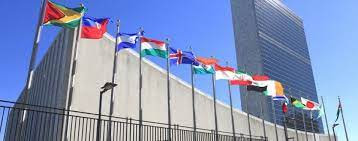
2. On Oct. 12, the United Nations voted to condemn Russia’s behavior in Ukraine. This, too, is reminiscent of the past: 
In 1920, the planet took its first step ever toward world federalism, or world government. It created the League of Nations, with forty-two countries joining originally, growing to fifty-eight, headquartered in Geneva. To his everlasting credit, President Wilson used all his influence to promote the creation of this world body, in conjunction with the Treaty of Versailles and the conclusion of World War One. Sadly, due to customary senatorial malpractice, the US ended up not joining. The novel idea was that national borders, as drawn on maps, are sacrosanct. Nations enjoy sovereignty. No nation is to invade, occupy, attempt to possess territory belonging to another nation. Borders may be negotiable, but they are not to be altered through war.
Read more...

Wednesday, September 28, 2022

What to do About Putin and Russia?

Tom Kando 

Putin is saber rattling again, threatening,   blackmailing, maybe bluffing, maybe not...I mean,   of  course, his renewed nuclear threat. 

 The current   deja vu is the Cuban missile crisis of October 1962,   the stand-off between President Kennedy and Nikita   Khrushchev, two weeks during which the world was   at the edge of nuclear Armageddon. We are not there - yet. 

Regarding the war in Ukraine, there is nothing refreshing to say about it. There are no words to express how evil Putin’s unprovoked assault and his devastation of the neighboring country are. 

We hear that Ukraine is turning the tide, that it may well win the war. This would be great, if it were realistic. 

The problem is that Ukraine is fighting the devil. Putin holds the trump card - the largest nuclear arsenal in the world. 

And just like the devil, Putin is not going anywhere. Russia’s and Putin’s defeats are hard to imagine, judging from what we know about the man’s mentality. It can be described generously as “stubborn,” or bluntly as “psychopathic.” 

At the risk of falling into the mea culpa mode so often typical of Western liberals, let me bring up what may have been a mistake on the part of the West. I am referring to the vast expansion of NATO after the collapse of the Soviet Union. We added a dozen new members and encircled Russia, making practically every state bordering that country into its enemy. Russia became entirely isolated, the international black sheep. 

By no means am I blaming the West for what Russia is doing now. There are those who bring up the tired old refrain of our “military industrial complex..” They argue that “this war is what the capitalist weapons manufacturers want, for profit, etc.” I am not among this group. 

Of course, we did not create Putin’s imperial ambitions. He might have behaved even more aggressively if we had not enlarged and strengthened NATO. There is always the Munich analogy, Neville Chamberlain, “Peace in our Time,” the appeasement of Hitler in 1938. Maybe the only proper response to such aggressive dictators is force. 

However, isn’t it possible that the West made some mistakes, that it didn’t think the situation through, didn’t think sufficiently about the future, about some side-effects of such a drastic expansion of NATO, especially the inclusion of all the countries that used to be Russia’s vassals? 
Read more...

Sunday, September 25, 2022

Are Hungarians from Mars?

Dr. Theodore von Karman
By Madeleine Kando

There are moments in an immigrant’s life, when one wonders where one belongs. Where one’s identity lies. Are you the person that left or are you the person that arrived? An emigrant or an immigrant? You cannot be one without the other, obviously. It’s like asking an airplane not to depart before arriving at its destination.

Most immigrants are much too busy trying to survive to ask themselves these existential questions. It’s a luxury that only a retired self-absorbed immigrant like myself, can afford. Besides, you would think that being a veteran immigrant of almost 50 years, I would have solved that riddle a long time ago.

I left my native Hungary at a very early age, not having any say in the matter. Then I left France to move to Holland where I basically grew up. I performed some test flights in my early twenties to England and Spain, but my final destination was America, where I spent the rest of my life.

The question I ask myself: am I Hungarian? French? Dutch? American?

I don’t kid myself by thinking that I am unique as an immigrant. The whole world is either emigrating or immigrating. We are a curious species and contrary to the proverbial cat, it hasn’t killed us yet. It just makes us want to travel and discover even more.

But Hungarians are a special case. There are more Hungarians that live outside of Hungary than in the country itself. The first ‘diaspora’ was not because Hungarians left their country; their country left them. The post-World War I Treaty of Trianon reduced the fatherland to a fraction of what if was before. As a consequence, two million Hungarians found themselves living outside their own country.

Other ‘diasporas’ (including the persecution of Jews in the Second World War and the Hungarian Revolution of 1956) caused another 3 million Hungarians to leave their country, including little old me.

So what happened to all these millions of Hungarians? Did they become part of the ‘melting pot’? Just another patch in the crazy quilts that make up nations?

That assumption is not borne out by facts. Rather than politely blending into their new surroundings, like normal immigrants do, Hungarians always make their presence loudly known by being smarter or weirder, or more creative than others.

The Martians

This was especially the case with a group of prominent Hungarian physicists an mathematicians who emigrated to the United States in the early 20th century. They were Jewish and were fleeing the Nazi occupation. After some time ‘observing’ them, as scientist like to do, their colleagues at the Los Alamos Lab, started to suspect that these men with their superhuman intellect, who had arrived from an obscure country and spoke an incomprehensible foreign language, were not ordinary humans, but were really from Mars.*

Nobel Prize-winning physicist Enrico Fermi once casually asked fellow scientists the following question: “The universe is so vast that intelligent life must be out there in large numbers. Eventually they should spread out all over the Galaxy. These highly exceptional and talented people could hardly overlook such a beautiful place as our Earth. They should have arrived here by now, so where are they? " Read more...

Friday, September 16, 2022

In Memory of Ata Kando

Ata Kando made these photos around 1958. They were never published. It is a love story that could not be told better than through Ata's incredible photographic talent. I publish it here posthumously, in honor of her upcoming birthday, on September 17th.


Read more...

Thursday, September 15, 2022

British Character

 Tom Kando 

 For a week so far, we have been treated to the pageantry, the ceremony, the dignity, the spectacle of Queen Elizabeth’s departure. 

I remember Queen Elizabeth’s coronation over seventy years ago (February 6, 1952). I lived in France at the time. I was nearly eleven. People didn’t own television sets yet, certainly not in impoverished neighborhoods such as mine. Even my junior high school had no TV. However, there was a fancy private school a few blocks away, and it had ONE TV set. So our teacher had my whole class walk to that rich school, and there, we watched Elizabeth’s coronation. 

Today, the world’s fascination with this event and the accompanying spectacle are interesting. At first, I had no interest in adding my two bits’ worth of comments to the media’s already oversaturated coverage. 

However, I can now see a connection with the topic of my previous post, which dealt with the subject of good cultures and bad cultures, good societies and “less good” societies. 

Since the Queen’s death, Britain has presented its best face to the world, of course. As we look at the streets of London, the Westminster Abbey, people placing flowers in front of Buckingham Palace, the impressive parades, and as we listen to eloquent speeches, most of us probably agree that England looks like a fine and attractive society, all things considered. Hmm...could WE perhaps learn a few things from the British? 

Before I proceed, a caveat: I understand that generalizations about entire countries are problematic at best and stereotyped prejudices at worst. 

And as far as Britain is concerned specifically: Let’s not forget that the country’s history is replete with bloodbaths, both domestic and worldwide (something that can be said about nearly all countries, especially powerful ones). 

But for now, what the news has shown us about Britain most recently is appealing, and it makes us think more highly of that country. The ceremony, the ritual, the formality, the speeches, the pomp and circumstance, the landscape, the behavior of all parties, including the royal family, the public and the authorities, all this makes us think: The British know how to do things well; they know how to do things and say things with dignity. They have class. 

To be sure, the country is facing challenges (which country does not, currently?). The British committed a major and irreversible error when they voted for Brexit. Centrifugal forces continue to threaten the island nation, including the continued possibility of a Scottish exit. The country faces looming economic problems, etc. 
Read more...

Monday, September 12, 2022

What are Memories?

By Madeleine Kando

The word for ‘memory’ in old English is ‘murnan’, which means ‘to mourn or remember sorrowfully’. You recognize that meaning in the Dutch words ‘mijmeren’ or ‘peinzen’, which means ‘to ponder, muse or dream’.

To have memories always has a tinge of deep, regretfulness, whether we are talking about positive or negative memories. They are sorrowful because they represent moments that no longer exist. On the other hand, we wouldn’t be who we are without our memories. Memories define us. Like strands of spaghetti, memories make us reach into the past and into our future. It is only because we have memories that we can ‘imagine’ our future self.

As I write this, I have memories of the three weeks I just spent in Kauai. They are wonderful, but also sorrowful. I dream of still being there. The older these memories are, the more they approach the pining stage. Six months from now, when Boston is buried under five feet of snow and it is too cold to even take my dog out to pee, I will pine and sorrowfully muse about Kauai. I won’t pine for the centipede that one morning decided to share my shower cell and whose bite feels like you have just been shot. I won’t dream of the monster wave that knocked me down to the sandy bottom and almost crashed open my skull. Those details will be conveniently forgotten.

When I was on Kauai, there was no room for memories because the present was so overwhelming: Hiking in the jungle, snorkeling and watching the stunningly beautiful Napali Coast. You cannot have memories of something that is happening in the present.

Kauai itself has a five million year old memory, stored in its red soil and lush vegetation. If a Kauaian could live that long she would have witnessed two billion sunsets, give or take. Do islands have memories? Or is it the privileged domain of sentient beings?

Most of us who go there to partake in this sensory orgy, want desperately to hold on to a fleeting experience by taking hundreds of photos of those sunsets. The original inhabitants more than likely watched the sunset after a hard day’s work tilling their taro fields. They didn’t watch it through their iPhone. Does the frenzied desire to hold on to the present by taking pictures of a sunset prevent us from experiencing it?

My parents were both professional photographers. They taught me a thing or two about viewing the world through a lens. Our ‘family albums’ do not sit on a bookshelf gathering dust, they ARE our family. My twin sister is not this grey haired woman that I Skype with on a regular basis. She is the chubby baby that I shared a crib with. She is the gorgeous 16 year old blond who stole all my boyfriends. She is the 21 year old ballet dancer posing for a perfect arabesque. Our entire lives were recorded, minute by minute, not because of our memories but because of the lens that both my parents focused on us, their children.

But you don’t need to be a professional these days to immortalize your life’s memories. We all feel this tug of war between our need to share our memories and memories’ inherent desire to remain private. They are supposed to die when you die. Don’t they reside in our brain? True memories are personal, intimate. Why? Because they are yours, no one else’s. A photo you post on Facebook becomes everyone’s memory. It loses it’s memoriness. It’s just a fake copy of a memory. The ‘friends’ that see that memory make it their own. It is not longer yours.

There are memories that one would rather not have. Those are so painful that they only appear in nightmares. It is the strength of our species that we cope with memories that otherwise would destroy us. If memories would force us to relive those nightmarish moments, we would not survive them. The present can break us, but we are masters of our memories.

Sometimes I fantasize about having no memory of the day before. I wake up, look at the sunlight through the bedroom curtains and I am full of wonder. Who am I? Where did I come from? Where am I going? I am new, not a copy of what I was yesterday. I don’t want to sound factitious. I know loss of memory is a devastating condition. But isn’t that what we do when we read fiction, watch movies and even imagine what it would be like to be a famous person? We try to become a person we were not before.

But the moment I return to my ‘real life’, I see my wrinkled hands type these words, I feel the stiffness in my back, I hear the rain pelt against my window. I cannot wait till the moment my brain has had time to wash the present clean of its sting and morph it into a laundered memory.

The only problem with that, is that since I am not a famous photographer whose memories are immortalized, no matter how clean washed my present will be, it will disappear the moment I disappear. Oh well, it’s probably for the best. Can you imagine if everybody’s memories would survive them? It would clog the airways, cause incredible memory traffic jams - one person’s memories would collide with another person’s memory at a traffic circle and they would not know where to go! It would cause a global memory epidemic!

That’s what’s happening on Facebook. We are confusing the real world with what happened in the past. Now, I pine for those sunsets that I didn’t ruin by watching them through my iPhone. I prevented the memory of that one memorable sunset to plant itself into my long-term memory, by trying to focus, get the right angle, etc.

Then, we share those memories with our friends on Facebook, pretending they are real memories. The next time you share a photo of a sunset on Facebook, add a caption: ‘warning this is a pretend sunset. To see the real thing, close your eyes and imagine one.’ leave comment here Read more...

Sunday, August 28, 2022

Kauai!

By Madeleine Kando

It’s early here in Kauai. A group of nenes waddle across the lawn in front of our lanai. Behind them, the blue ocean shimmers in the morning sun. In the hazy distance, Mount Makana, also known as Bali Hai, stands guard over her dominion, making sure everything is as it should be.

God must have had Kauai in mind when he created the concept of ‘beauty’. It is a sensory paradise. The oldest island in the Hawaiian chain, Kauai has had time to turn into a lush, green garden island. The trade winds make sure temperatures are never too hot or too cold and constantly envelops your skin with a silken touch.

A bright green gecko with red warpaint on his back is on a warpath across the wall. He watches me and is as curious about me as I am of him. He catches a bug and licks his chops, waits, catches another one. An identical copy appears. They now confront each other. Two minuscule warriors competing for a morning breakfast.

Suddenly, one of the nenes screeches as he spreads his large wings and runs at high speed across the lawn. I see the shadow of a black cat disappear in the brush. But in an instant everything is back to its peaceful state. The feral cat population on this island is obviously not on good terms with the nenes.

We prepare for our first snorkel adventure and choose to go to Anini Beach, where the surf is mild and entry fairly easy. My 10 year old grandson Marshall, his mother and I wade into the waves. The water is warm and as we flutter kick our way closer to the reef, hundreds of tiny yellow finned goatfish encircle us, turning the water into a silver cloud. I hold Marshall’s little hand in mine and we forge our way closer to the reef.

In the crevices, we see the famous trigger fish (Humuhumu), with its blue mustache and triangular shape. He doesn’t seem to appreciate our presence and emits a plume of milky dust in his wake as he swims away. There are bright yellow tang fish and the impressive parrot fish (Uhu in Hawaiian). These are in their bright blue male phase and are known to keep a harem of females. When the male dies, the alpha female of the harem switches sex, becoming a male herself.

Further towards the sandy bottom, we see a group of totally black triggerfish. As one of them turns, a gorgeous blue and green line radiates from its eyes. As he swims away, tossing its fins back and forth like a flamenco dancer’s skirt, my breath is taken away: a neon blue halo appears along his entire body.

We turn a bend in the reef. Suddenly, Marshall points at something, frantically waving to me to come closer. Then, I see it: two larger white and black striped damsel fish are being attacked by a group of smaller, brightly colored tamarind fish. One even pushes its nose under a damsel fish’s gill. As we look closer, we realize that we are looking at a cleaning station. These larger fish are actually being cleaned by the smaller fish, removing parasites and getting a meal in return.

Snorkeling is like a drug. It opens a door on a different world. Even in my diving days, what we saw did not match the variety of colors and shapes that one sees closer to the shore. The corral must have been a lot healthier before tourism caused it to deteriorate, but the island is now limiting access to the northern beaches, giving the corral and reef fish a chance to regenerate. 

Like hundreds of others, we are here as a family, enjoying one of the most unique locations on earth. The nenes and the mynah birds know this. Their loud screeching tells us: ‘We allow you to be here, as long as you behave yourself. As long as you respect what is around you.’

Hawaii not your run of the mill volcanic islands. Usually volcanic eruptions happen where two tectonic plates meet, but the Hawaiian-Emperor Seamount chain sits right in the middle of the Pacific Plate and reaches all the way to Siberia. The source of its enormous volcanoes is a hotspot that originates deep in the center of the earth. The Pacific plate slowly moves towards the North American Plate and slides under it (subducting) at a rate of 7 inches a year.

Imagine a sheet of thick cardboard that slides over a blow torch. Every time the blow torch ignites, it melts the underside of the sheet and eventually burns a hole, pushing the molten lava through it, thus creating a volcano. Hawaiian volcanoes were formed very slowly, creating huge dome shaped mountains, resembling warrior’s shields, hence they are known as shield volcanos.

Kauai is the old lady of the bunch and is slowly being eroded. Traveling south, to the other Hawaiian islands, you can see how Kauai looked like millions of years ago. The Big Island is still in its infancy. It is black, steaming and glowing with fresh lava. As you travel north, there is Maui still young, only about a million years old, but already covered with lush vegetation. Further up, towards the Asian continent, you peer into Kauai’s future. This beautiful old lady will shrink, until it turns into an Atoll and will finally completely disappear under the waves.

Waimea

Today is our ‘Waimea’ day. We drive to the other side of the island to Waimea canyon. Also known as ‘the Grand Canyon of the Pacific’, Waimea is a spectacular gorge, roughly 3,600 feet deep and 10 miles long. Here you can witness the island’s turbulent past.

As we drive up the winding road from the town below, we see the island of Nihau in the hazy distance. They call it the forbidden island because only native Hawaiians are allowed to live there. At mile marker 14, we drive our jeep onto a hunters’ trail called the ‘Miloli’I Ridge Road’. It is supposed to be drivable all the way to the end point, 5 miles down, with a stunning view of the Napali Coast, but half way in, the tossing and jostling becomes too much and we decide to hike the rest of the way. The scent of eucalyptus and guava fruit accompanies us. We stop half way down at a picknick area and eat our Subway sandwiches, washing it down with Hawaiian beer. 

As we huff and puff our way back, uphill this time, a red dust covered pickup passes us. In the cargo bed, we see a dead bloody wild boar, with his legs dangling over the side. Well, this is a hunter’s trail after all. It wasn’t put there for the benefit of soft-hearted tourists from Boston.

The Napali

We decide to pay a small fortune to go on a Napali Coast Boat Tour. We meet at Anini beach, where we leave our flip flops in a basket and wade through the shallow water to board the small catamaran. The engines rev to take us out to deeper waters and we begin the trek around the Napali Coast. The water glistens in the morning sun and the coastline become more and more beautiful. We enter caves carved out by the surf, starboard we see a turtle lazily bob up and down on the waves.

The captain points up to a narrow red line on the cliff. That is the notorious ‘crawlers’ ledge’ on the Napali trail. At this point, the trail is so narrow that hikers literally have to crawl on hands and knees. I hope I will come back as a mountain goat in my next life, so I can enjoy the Napali without having to crawl on hands and knees. We see boobie birds nesting, a goat here and there, but mostly the majestic cliffs. There is no better way to see this coastline than from the ocean side.

On the way back, the boat is being slammed down hard, we get tossed left and right , sprayed clean and I silently offer a small prayer to Mr. Dramamine. The boat gets pulled onto the boat ramp, passengers and all and we put our flip flops back on, unforgettable images floating in our heads for days to come.

We are facing North West, the perfect direction for the famous Kauai sunset. A rain storm is approaching the island, inching its way closer over the water, but on the land side, the sky is blue with small fluffy clouds. Bali Hai is half hidden, bursting with moisture. The sun emerges from behind the overhanging clouds, the entire firmament ablaze with an indescribable array of colors: purple, orange, gold, bluish grey. No amount of words can do this sunset justice, even the nenes take time out from munching the grass to watch it. 
Read more...

Thursday, August 25, 2022

Kauai!

  Read more...

Friday, August 12, 2022

Grandfathers and their Daughters

By Madeleine Kando

My family is originally from Hungary. That is where I was born, but soon my parents moved to France. Then, when my brother, twin sister and I were in our early teens, we moved again, this time to Holland. We quickly forgot how to speak Hungarian, but never lost our French.

We adapted well to our Dutch life. My mother had divorced her second husband and tried to make a living on her own. We entered puberty with a vengeance and partied day and night. One week-end blurred into another, all ending up in the bathroom, vomiting our guts out.

Decades later, when I was already a grandmother myself, I found an old letter, written by my grandfather. It was written after one of his infrequent visits to the West, infrequent enough for us kids to see him as a quaint old man, speaking perfect French, with a Hungarian accent. The letter has no date, but it was addressed to us and must have been written during that period, when we were partying as if there was no tomorrow. My mother, a photographer, was trying to work on the third floor of our flat, an impossible feat considering the loud music and drinking that was going on downstairs.

The letter is written in French, but not just your daily variety. It is clear that the writer is a highly educated man. He not only spoke and wrote French, but translated hundreds of works from Greek, Latin, Russian, German and English. Behind his highly stylized prose, the sadness and desperation of an old man is as clear as a bell.

It is a lamentation of a concerned father, trying to talk some sense into three semi-delinquent teenagers, who were literally abusing their mother. It is a plea that obviously fell on deaf ears. ‘Grand-père’ as we used to call him, knew this even as he was writing it. He knew he was fighting a lost battle. I don’t think any of us read the letter at the time. Many years later, as I read this letter, the helplessness of a father trying to protect his daughter is palpable.
Read more...

Wednesday, July 20, 2022

Pi

Tom Kando 

My previous post began a discussion of some interesting mathematical problems which I want to share with you. I am fully aware that I am a novice in this field. Last time, I wrote about prime numbers. Today, I want to talk about another fascinating topic, namely Pi (Ï€)

You have heard of the expression “squaring the circle,” right? It means doing (or trying to do) the impossible. 
In order to construct a square with the same area as a given circle, you must first determine the area of the circle, using the following steps: 
1. measure the circle’s circumference. 
2. measure the diameter, that is the distance across the circle between the two halfway points of the circumference. 
3. determine the radius, which is half the diameter. 
4. Square the radius and multiply this number by 3.14 (Ï€). 
In other words A (Area) = Ï€ x r 2 (r is radius) 
Then, you simply compute the square root of the circle’s area. This gives you the length of the square’s side. 

Example. You want to square a circle which has a circumference of 1,000 meters. 
Using the Ï€ approximation of 3.14, The circle’s diameter is therefore about 318.5 meters, and the radius is half of that - 159.25 meters. The circle’s area is therefore 3.14 x 159.25 2 = 79,582 square meters. The square’s side is the square root of this (√79,582) i.e. approximately 282.1 meters. 
For practical purposes, this procedure will do. However, the problem is that Ï€ is a transcendental number. 
Transcendental numbers are non-algebraic and irrational: They are NOT the solution of an algebraic equation. They cannot be expressed as the ratio of two numbers. They have a non-terminating decimal.

22/7 is often used as an approximation of Ï€. It is about 3.14. Since it is a fraction, it is a rational number. Like Ï€,, it has an infinite, non-terminating number of decimals. 
However,UNLIKE Ï€,, the decimals consist of a six-digit repetend. . For example, if you divide 22 by 7 to 24 decimals, you get 3,142857 142857 142857 142857. “142857" is called a “repetend,” and it repeats ad infinitum. Read more...