Monday, June 20, 2011

Welfare

by Madeleine Kando

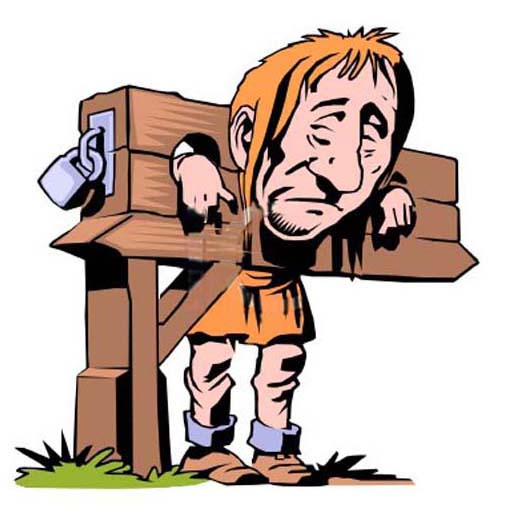
Before our modern day 'enlightenment' period, poor people were seen as not that different from criminals. They were usually put in 'workhouses' (poor houses) where their clothes, their families and any other personal belongings were taken from them. They were set to work for no pay and beaten if they didn't do exactly what they were told.

There were a lot more poor people relatively speaking than now. It didn't matter if they were poor because they were handicapped or sick and couldn't work. Poor was poor. Charlie Chaplin lived in a poor house with his mother when he was a child.
Read more...

Saturday, June 18, 2011

What is my Name?

By Tom Kando

Yesterday, I went to pick up a prescription drug which my doctor had faxed to the local pharmacy. The pharmacy clerk asked me for my name, and I gave it to her - Tom Kando - adding that the prescription had been faxed in the previous day by Dr. Pollock. She couldn’t find it, so I suggested that she also look under “Cando,” with a C.

It’s happened more than once that when I give my name to someone in an office or on the phone, their brain goes on auto-pilot before I get a chance to spell my name, and I am forever entered as Cando. This can cause a lot of aggravation later, when dealing with the IRS, insurance companies, banks, airlines, etc. So I have learned, whenever asked for my name by some clerk, to reply as follows:
“My name is spelled K - A - N - D - O,” and then I say the word - “Kando.”

And sure enough: yesterday, as soon as the pharmacy clerk looked under “Cando,” she found my medication. She gave it to me and said, somewhat irritated:

“You should have given me the proper name in the first place. It would have made things a lot easier.”

I apologized for the inconvenience, but added that the proper name is, in fact “Kando.”

“I am sorry sir,” she insisted, “That is not your name. The prescription order form says that your name is ‘Cando’. ”
“My name is ‘Cando’?” I inquired, somewhat surprised...
“Yes, that is your name. Surely your doctor knows your name, doesn’t he?”
“You are absolutely right,” I said, trying to sooth her feelings, “my physician does know my correct name...”
“Then why didn’t you give me your true name to begin with? The one on the medical record. We can’t just go by all sorts of different names, you know...”
“True,” I admitted, “one can’t just go by all sorts of different names...”

Then, as an afterthought, I asked:

“By the way, can you show me the fax the doctor sent you, just to see how my name is spelled?”
“No sir, we are not allowed to do that, sir. The Federal privacy law.”
“I understand,” I replied, “privacy is important.”

I went home. It was a total defeat. I have to hand it to the clerk. She was a pro. She had me checkmated - on all fronts. leave comment here
Read more...

Friday, June 17, 2011

More, or Less?

by Madeleine Kando

There are now so many 'professions' out there that entitles someone to tell you how to eat, drink, walk, breathe, etc. that we have totally lost confidence in our own common sense.

Nutritionists, personal trainers, diet consultants, shopping advisers, TV celebrities.. they all feed on our gullibility, our insecurity and our childish notion that by doing the 'right thing', following the rules, we will buy our ticket to a happy, healthy immortal life.

I try not to get brainwashed by the barrage of unsolicited, unnecessary, overstuffed, full of hot air kind of advice that comes at us from these so-called experts.

I was listening to my daily fix of NPR on my way home, when I happened to catch a program on weight loss. ‘Everybody knows that the best way to loose weight is to exercise’ said the announcer. ‘Really? What happened to eating less? Wouldn’t that be the first line of defense against gaining weight?’

You see, because we believe in a magic bullet, our immediate reaction when we have a problem, is to add something to the equation. Which is strange: in science, a problem is usually solved by going back to the basics, making the equation simpler, not more complicated.

Not so in our personal life. We are lactose intolerant? We add a pill to our daily routine. Who would ever think of not drinking milk? Out of the question.

We sweat too much? We add deodorant to your daily grooming routine. Drinking less so you have less moisture in your body is not an option for most people.

How many of us menopausal females have had estrogen shoved down our throat? 'It helps with menopausal hot flashes' says my gynecologist. What happened to the centuries full of women who cruised through menopause and survived the hot flashes?

This obsession with 'more' goes way beyond my nagging about nutritionists. Too many MRIs, CAT scans, X rays. Too many procedures, which is good for the doctor's pocket book, not so good for the cost of health care to society.

'Less' is such a negative word in our culture. 'More' has been stamped into our psyche from the day we were born, so no wonder we are suspicious of solving problems by doing less. And doing nothing is considered downright stupid. Although I cannot keep track of how many problems I solved because I just waited it out.

I was going to write a long story to convince you that less is better than more, but that would defeat the purpose of my argument, so I will follow my own advice and stop right here. But feel free to comment abundantly. leave comment here
Read more...

European E. coli Outbreak Holds Lessons for the U.S. Government

by Jeremy Fordham

The European E. coli outbreak has people on both sides of the Atlantic on high alert. Americans have been critical of the way the crisis has been handled, but there isn't any reason to presume that the U.S. government would be any better prepared to handle this particular strain of E. coli than the EU. After all, the U.S. is also dealing with its own, less-widespread strain of E. coli as it is.
Read more...

Sunday, June 12, 2011

Mea Culpa: Europe's Guilt Complex

by Madeleine Kando

If you are a liberal and live in an enlightened democracy like the US or Europe, it is politically incorrect to say anything positive about your own culture. It is much more fashionable to self-criticize. After all, the West, with its history of colonialism, racism and fascism has caused tremendous suffering around the world.

No wonder we have such a low opinion of ourselves. We have to atone for our past sins by castigating ourselves and be humble. In Europe this feeling of guilt is especially strong. The European Union was created out of a sense of guilt for what happened during the Second World War. Which is good, right? One nation can not fight itself.

But, as my husband Hans likes to say 'guilt is a bad motivator for action'. Guilt is paralyzing. It turns action, good or bad, towards the self and can not solve any problems in the world.

In his book 'The Tyranny of Guilt', the French author Pascal Bruckner, describes how Europeans are so guilt ridden that they find it almost natural that terrorist acts are committed against them, against their affluence, against their evil past. In other words, they deserve it.

But Bruckner reminds us that the West is also responsible for abolishing slavery, for Women's rights and freedom from Fascism. It has taken great determination, a rock solid conviction in the 'justness' of these causes. Now we see those values being attacked from within, like a rot in an old vessel.

Because Europe has washed its hands off of world affairs, afraid of doing more damage, it is up to the United States to do the dirty work. But rather than criticize America retrospectively for fighting its battles, Europe could show America how to 'keep a cool head and find moderation'.

Bruckner also addresses the subject of Multiculturalism in Europe, which has all but failed. Although the intention was to protect minorities from discrimination, all it has accomplished is to create huge ethnic ghettos, like the 'bidonvilles' of Paris, which imprison men, women and children by isolating them in their own culture. By trying so hard to protect other people's cultures, the Europeans have forgotten how to protect the individuals within those cultures. Multiculturalism is the opposite of 'assimilation'. So, which is better, to live in a melting pot like America, or in a salad bowl like France?

Bruckner's final words of advice to Europe are: 'Don't let the debt to the dead win out over the duty to the living.'
leave comment here
Read more...

Wednesday, June 8, 2011

Anthony Weiner: Stupid is as Stupid Does

by Marc Hersch

In hi-tech America the art of doing stupid things is being lifted to new heights. Take Anthony D. Weiner's predicament. It's enough to make the strongest of men cringe in horror. It's one thing to have your mom or wife find porno magazines under your bed or to make a drunken fool of yourself flirting with a pretty receptionist at the office party. It's another thing to act out your libidinous male fantasies on the Worldwide Web. What was that man thinking!

Come to think of it, what are we all thinking? No one has a lock on doing stupid stuff but the sad fact of life reads... Everything you say and do in public can and will be used against you in the court of public opinion.

So why is it that we have so embraced the Worldwide Web as a place to make public everything we say and do? Are we crazy?

As if Facebook and Twitter weren't enough, God himself in the person of Steve Jobs, announced just yesterday that the age of "cloud computing" is now here!

That's right! Jobs is pushing the idea that everything we do and say and everywhere go and stay can now be recorded by personal computers, cell phones, and GPS equipped PDA's and stored...

(Shouting now) ON THE WORLDWIDE WEB!

I'm a pretty smart guy--smart enough to know that some of the things I do turn out being pretty stupid, but doing everything on the Word wide Web raises the meaning of stupidity to a whole new level.

Stupid is as stupid does!
leave comment here
Read more...

Friday, June 3, 2011

Oh la la! What to Do with the 'Vous'?

by Madeleine Kando

One of the parents at my dance studio asked me: 'Tu donnes des leçons le lundi prochain?' (Do you hold classes next Monday?) I was a little offended. I am her child's teacher and did not expect to be addressed with the familiar 'tu' form for the word 'you'. But I forgave her because I knew she was from Canada. Had she been French, I would not have let her off so easy.

One of the advantages of living in an English speaking country is that there is only one word for 'you'. But many languages have two distinct words. In French the terms are to 'tutoyer' and 'vouvoyer' someone.

'Tutoie-moi' means 'don't be so formal'. It's quite a tricky affair though, if French isn't your native language. Only bungling foreigners are forgiven when they mix up the terms 'tu' and 'vous'.

Originally the term 'vous' was only used in the plural (as in you guys). It became the 'polite' form of the singular 'you' because plurality is equivalent to power and prestige. 'If there is more than one of me' thought the king, 'it will make me even more important'. So he ordered his subjects to address him with 'vous'.

Once the King acknowledged his plurality, he had to refer to himself as ‘We’. Louis XIV dismissed visitors to whom he granted an audience by saying: “Nous vous permettons de vous retirer.” (We permit you to leave). Pompous professors still refer to themselves in the plural: “As we indicated to the reader in the preceding chapter….” This bs is called pluralis majestatis.

In present-day French politics the 'vous'and the 'tu' are used as powerful tools to manipulate, convince, insult and denigrate. The 'tu' polilticians are liberal leftists who see each other as equals. The 'vous' politicians are conservative. These two camps spend an inordinate amount of time deciding whether they should 'tutoyer' each other or not. It took these two very eminent politicians several minutes of precious airtime to argue over this, the issues at hand being completely forgotten: Le tu et le toi en pollitique

When Sarkozy asked Chirac whether they should 'tutoyer' each other, Chirac answered 'Si vous voulez'.

You would think that having two forms for 'you' would give people more opportunity to be polite. But the opposite is true. To use a 'tu' when a 'vous' is expected can be very insulting and it is like a slap in the face. French politicians like to insult each other in public. In that regard American politicians are incredibly well-mannered and restrained. But I have a feeling that being snobbish, aggressive and arrogant are qualities that the French public doesn’t find particularly negative.

Not too long ago long-time married couples still addressed each other with 'vous'. In 'La Chamade' a 1968 movie, after a long night of passionate love making, Michel Piccoli asks his wife (played by Catherine Deneuve): 'Vous voulez une cigarette?' Weird.

To graduate from a 'vous' to a 'tu' in a relationship has to be negotiated on an individual basis and there are really no hard and fast rules. It's like two countries who have to trust each other enough to establish diplomatic relationships.

But if you are not sure, just stick to 'vous'. Don't take it too far though. You don't want to be asking your two-year old: 'Vous voulez un cookie?' (would your grace like a cookie?). But it is always a bigger blunder to 'tutoyer' someone inappropriately than to 'vouvoyer' them.

Comprenez-vous?
leave comment here
Read more...

Wednesday, June 1, 2011

How to entertain - and not entertain - foreign guests


by Tom Kando and Anita Kando

As European-Americans, we have hosted European visitors to America innumerable times, and we have also been hosted in Europe countless times. These mutual visits have been a two-way street and a lifetime of enjoyment for both sides. But people make mistakes.

Many people don’t understand that when one visits another culture, thousands of miles away, one should be exposed to that culture’s fortes - not to its pathetic attempts to replicate the visitor’s own culture.

Yet, over and over again I have seen (1) American hosts showcasing to their European guests American imitations of European things, and, conversely, (2) European hosts treating their American visitors to European mimicry of American things.

The impulse is commendable. Hosts want their guests to be comfortable, to feel at home. That is their idea of hospitality. But it’s a mistake.

Let me give you some examples:

1. When our daughters went to Belgium on a three-week student exchange program, their hosts desperately searched for, and finally located, a Mexican restaurant, thinking that this would make the girls feel more at home, like in California. Our daughters reported that this was the worst Mexican food they had ever tasted. On the other hand, when their hosts took them to eat mountains of mussels with Belgian fries buried in mayonnaise, they had the feast and the delight of their lives.

2. Conversely, when the Belgian exchange students came to spend three weeks in California, some of them were taken by their hosts to (1) a Hershey chocolate factory in Oakdale and (2) a Budweiser beer factory! Of course, the students (most of them experienced Belgian beer guzzlers) laughed: You see, Belgium makes the world’s best chocolate, and the world’s best beer, bar none.

So here is my advice to anyone in such a situation - on both sides of the Atlantic:
If you are a European hosting American visitors:
Say you are Dutch and you are hosting friends from the US: show them the Keukenhof tulip fields, the Rijks Museum, the Van Gogh Museum, the Red Light District, the polders dotted with windmills, show them anything Dutch, but don’t drag them to the Great American Disaster - a burger joint in central Amsterdam. Don’t try to compete with American hamburgers, you can’t win.
Don’t drag them to a shopping mall. Theirs are bigger.
Don’t try to impress them with your wildlife. They got mountain lions, coyote and rattle snakes outside their backyards.

If you are an American hosting European visitors: Say you live in California: drive them to Disneyland, fly them to Vegas, show them Death Valley, the Grand Canyon, Lake Mead, Hoover Dam, but don’t shove the Sacramento Crocker Museum down their throat, or even the San Francisco De Young museum. Don’t try to compete with the Louvre, the British Museum or the Museum of Natural History in Vienna. You can’t win!


Don’t drag them to the Hearst Castle. It pales in comparison with Versailles or Schonbrunn. It will bore them.
Don’t take your Parisian friend to Sacramento’s best French restaurant.
Don’t take your Italian female relative shoe shopping.
Don’t offer American cheese to Dutch guests.

Play to your strength, not to your weakness! Europe and America are both magnificent, each in their own way. Don’t bring coal to Newcastle. People don’t travel to see poor replicas of their homelands! leave comment here
Read more...

Thursday, May 26, 2011

The History of Food Revealed

by Madeleine Kando

A 1999 BBC series on the origins of pornography inspired me to write a spoof. Rather than take sex as the subject however, I decided to replace it with food.

Before the 'Great Obesity Epidemic' of the late twenty-first century, when millions of people died from overeating, food and the consumption of food were a very inoffensive, daily activity that people engaged in without any shame or secrecy.

In previous decades it was customary to eat when one was hungry. There were even special places where groups of friends, husbands and wives, children and parents, sat together at a table and ate food, right in front of each other, there in public! These places were called 'restaurants'.

Before the 'Big OB-epidemic.', food was not considered taboo. But when more and more people became the victims of overeating, when women lost their ability to become pregnant and men became impotent, the government HAD to take steps to save our society from destroying itself.

Slowly, food consumption came to be seen as unnatural, something that was best practiced in secret.

Congress first passed the 'food obscenity' law, legislature that prohibited any kind of graphic display of food in public places. The second law prohibited parents from eating in front of their children. Many couples were denounced by their neighbors and faced severe prison sentences.

Soon, other laws followed: eating in public was deemed offensive and common decency required that any activity involving food consumption, talking about food and showing pictures of food be restricted to the privacy of one's home.

Believe it or not, but the expression 'May God curse you with a voracious appetite' did not exist before then. Other profanities, such as 'suck you' or 'eat cake' are fairly recent as well.

Black market trafficking of 'food-ography' (pictures of people eating together and other lurid depictions of food-related subjects) became a profitable business and people who could afford it joined secret societies where all manner of food perversion was the order of the day: strippers stepping out of giant cakes, food fights, movie showings of how food was produced and worst of all, members engaged in food orgies where they ate at nauseam and regurgitated their food in order to eat more.

As might be expected, all of this repression had the opposite effect of what was intended. Children who innocently walked to school were harassed by individuals who exposed themselves eating cake. The papers were full of articles about food voyeurs who had been caught in the act of looking at pictures of food. Some individuals developed severe cases of food fetishism for which they needed special psychiatric treatment. Virtual labs were developed where one could experience all the pleasures of eating without ingesting a crumb.

Soon there was so much censored, underground material available, on the internet, in chat rooms, on video, that people cut their workday short in order to secretly eat while watching movies about food.

People started to gain more weight than ever before. The simple pleasure of only eating when one was hungry had been lost, seemingly forever.

The Y.U.M. organization (Young, United and Mad) lobbied Congress to repeal the anti-food laws and eventually won. The circle was closed. Food slowly became a part of life again.

Some people still like to abuse food and occasionally succumb to the pleasure of eating in secret, but in general this period was a wake-up call for most of us. Who knows, maybe some day we will be able to let go of our inhibition and enjoy each other's company while eating in those quaint places called 'Restaurants'.

When tempted to eat in secret, repeat the mantra: ‘food is food is food is food..’ and don’t stop until the urge has passed. leave comment here
Read more...

Saturday, May 21, 2011

Infrastructure

by Madeleine Kando

I just returned from The Netherlands, which usually causes me to go through ‘road-shock’. The roads are so unblemished over there that falling asleep at the wheel is the highest hazard of driving. I had gotten used to the smooth asphalt of the Dutch highways.

On my drive back home from Logan Airport it felt like our car had entered a giant pinball machine. We were dodging potholes and cracks left and right, while trying to maintain an appropriate speed. Many of the signs had pieces missing and the lettering had peeled off which makes it hard to know where you are. But when I saw the familiar ‘No -assing’ sign on Lexington Street I knew I was home.

I remember a time when the American highway system was the envy of the world. I used to watch Hollywood car-chase movies in my small Amsterdam apartment with areal views of the typical four-leaf clover and six-story highway exchanges. It was still a sight to behold, a symbol of what American engineering could accomplish.

Since then, American roads and byways have turned into one of this country's worst nightmares. Being rated number one in the 1960's, America now ranks 23rd in quality of road infrastructure, somewhere between Spain and Chile.

The question is why? Why is America's transportation system so bad? Doesn't the sheer size of the US call exactly for that kind of investment?

For the past 30 years America's roads and bridges have been left to rot while smarter nations have been building, improving and maintaining their roads, bridges and canals. Since the 1970’s America has gone from spending 5% of GDP on infrastructure to only 2.4%. China spends 9% of GDP.

Although we complain about gas prices being so high, Europeans pay much higher taxes on cars and gasoline. Funding for transportation projects comes from the European Investment Bank, a non-profit organization whose shareholders are the member states. This allows the different EU countries to get cheap loans for their projects. The Kerry/Hutchison plan tries to create a similar funding apparatus and hopefully will pass the house. But I am not hopeful. Simply put, Americans are not willing to pay for an improved road infrastructure.

Compared to many other nations, high-speed trains are practically non-existent in the United States. China, which is about the same size as the United States is spending $50 billion this year alone on a speed train system that will travel at 220 mph. Compare that to the $8 billion that Obama proposed which, of course, went nowhere. The current infrastructure would not even permit bullet trains to go at fast speeds over bridges and through tunnels that are currently in such need of repair.

Another very obvious reason why our infrastructure is crumbling is the way projects are run these days. It took a little more than one year to build the Empire State building and only four years to build the entire Golden Gate Bridge. Compare that to the little overpass over interstate 95 in Waltham which has been under consruction since 2004 and still isn't completed.

What happened to the America that I admire? The innovative and efficient nation that everybody else looked up to? Bickering continues in Washington and there is a clear lack of vision. Like an old woman sloshing around the house in her slippers and robe, America doesn’t bother to take care of herself any more. She lets herself go. Future generations be damned.

Some of this information is found in an article in the Economist of April 28th, 'Life in the Fast Lane'
leave comment here
Read more...
